Chimney Basics
How does a chimney work?
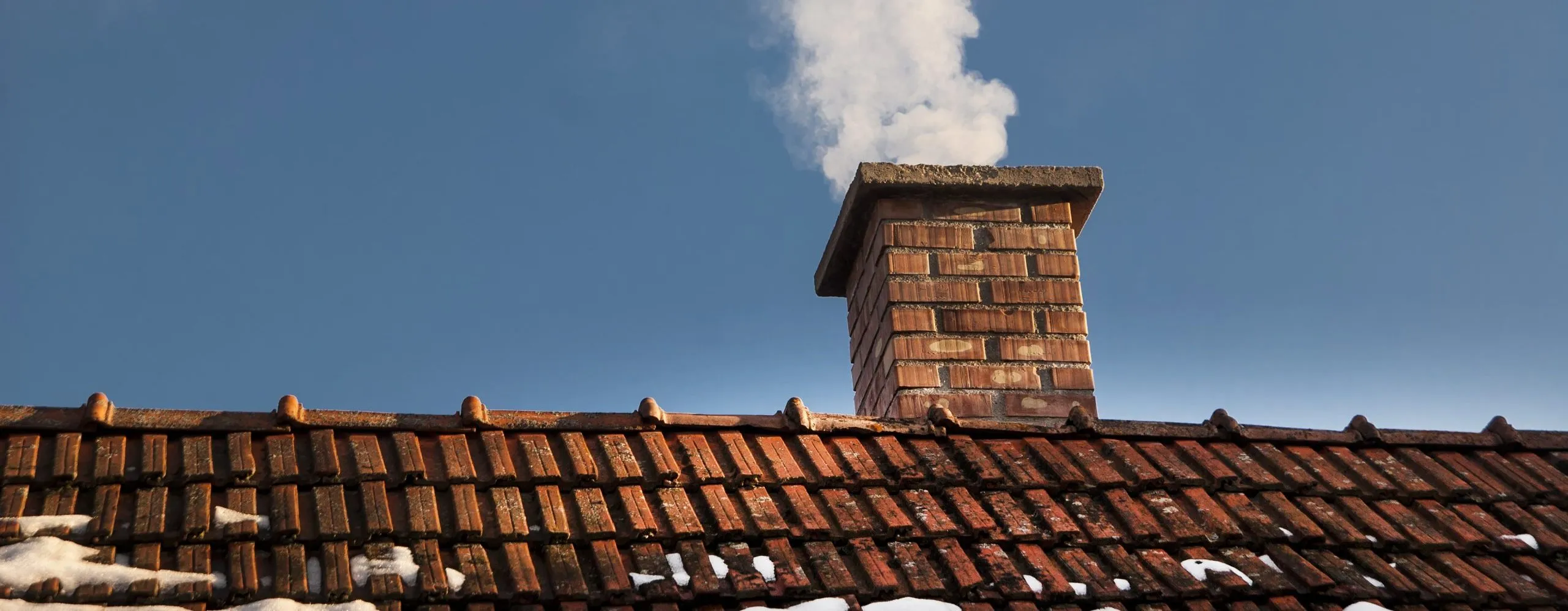
In addition to fireplaces, chimneys are required for anything that burns coal, oil, wood, or gas. Carbon dioxide and other byproduct gases are taken out of the air by chimneys. Your safety depends on the functionality of your chimney. Your chimney, fireplace, and vents should be inspected at least once each year, according to the Chimney Safety Institute of America. Contact us if you believe your chimney has problems or if you haven’t had it inspected in the last year.
Why Understanding Your Chimney Matters:
Understanding the main components of your chimney and how they work can make it easier for you to spot issues and be more aware of potential safety risks. But since specialists have the knowledge and tools to thoroughly evaluate your chimney, they should be hired to do so once a year to help keep your home safe and functional. It’s useful to consider each component of a chimney and its purpose in order to comprehend how a chimney operates.
Anatomy of a Chimney
The Bricks
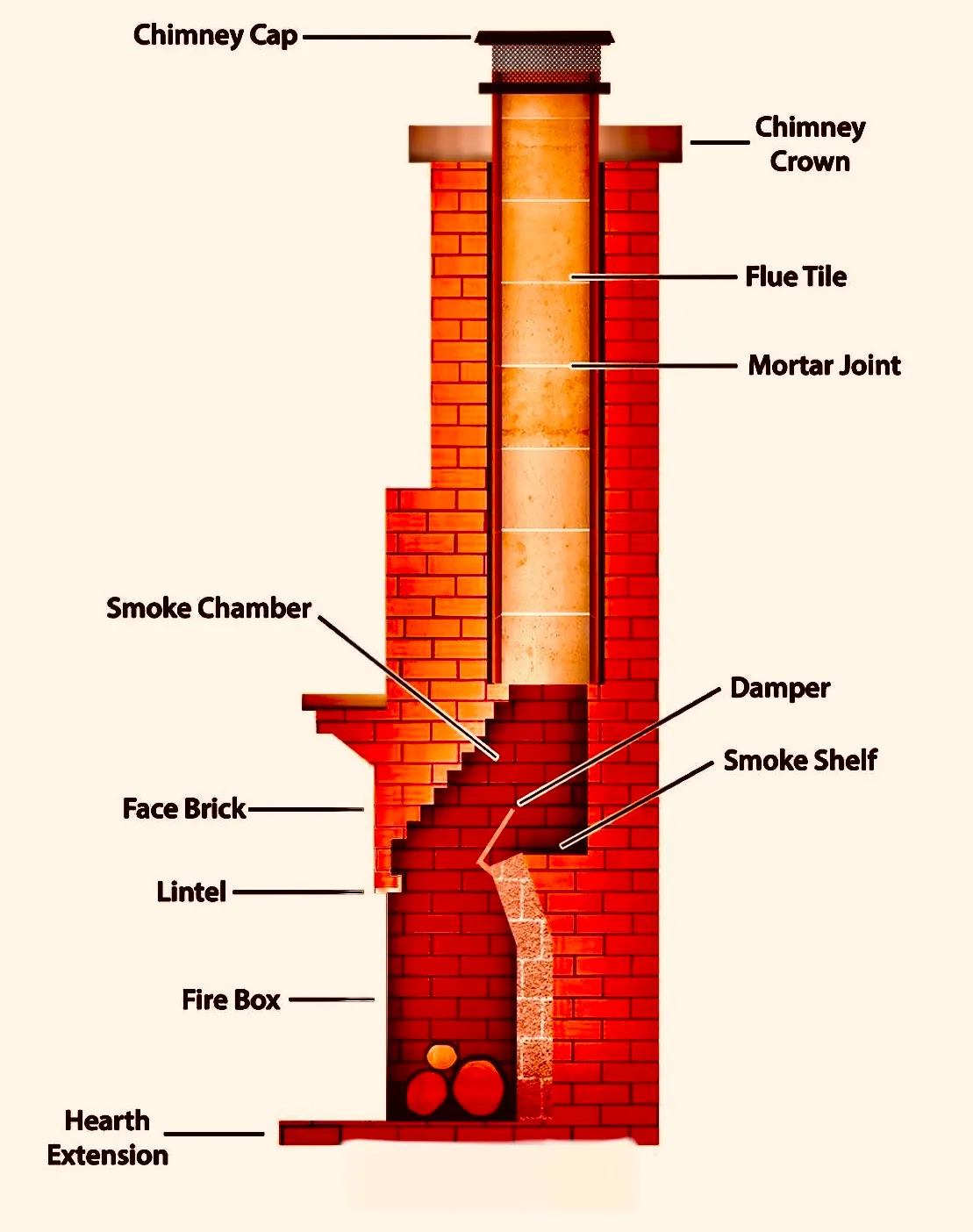
The structural integrity and effectiveness of your chimney are guaranteed by the quality of the bricks. Additionally, deteriorated bricks are more prone to allow moisture to soak through, which could lead to the formation of mold or mildew as well as other problems.
Chimney Cap
A chimney cap is essentially a hat that covers a chimney to shield it from precipitation and other material like leaves and twigs. Mesh is frequently used around chimney tops to keep animals like birds and squirrels out of your chimney. Due to its spark guard-like properties, this mesh can also assist in preventing fires in your home.
Chimney Crown
The concrete covering the top of the chimney is known as the chimney crown, which serves to keep water out of the chimney system. It is frequently mistaken for a chimney cap. The majority of the chimney is covered by a chimney crown, while the flues that are still accessible for venting are protected by a chimney cap.
Chimney Flue
The tunnel through which smoke and exhaust can leave your house is the chimney flue. It’s crucial to line your chimney flue. Do you have any questions about chimney flue cleaning? Since soot poses a fire risk, it’s crucial to have it inspected annually and professionally swept as needed.
Chimney Damper
Just above the firebox, chimney dampers aid in controlling ventilation. When the chimney is not in use, they keep it shut to prevent cold air from getting in. When the fireplace is being used, the chimney damper should be open; otherwise, it can be shut.
Chimney Liner
We put up chimney liners made of polypropylene (PVC), stainless steel, and aluminum. Flue liners serve as a barrier against the heat transmission from your fireplace as well as a means of containing and removing the flue gases produced by your heating system. Before utilizing your chimney again if there are cracks in the liner, it is crucial to have it replaced immediately.
Smoke Chamber
Smoke passes through the smoke chamber before it enters the chimney flue. Slanted walls in this location make it simpler for smoke to reach the flue. A smoke shelf is also present in the smoke chamber, and its purpose is to collect moisture and other outside detritus.
Chimney Flashing
Where the chimney meets the roof is where chimney flashing is located. It can be made of lead, steel, copper, aluminum, or copper. Because it shields your chimney, roof, and the rooms below it from moisture, chimney flashing is crucial to remain in good shape.
The Fireplace
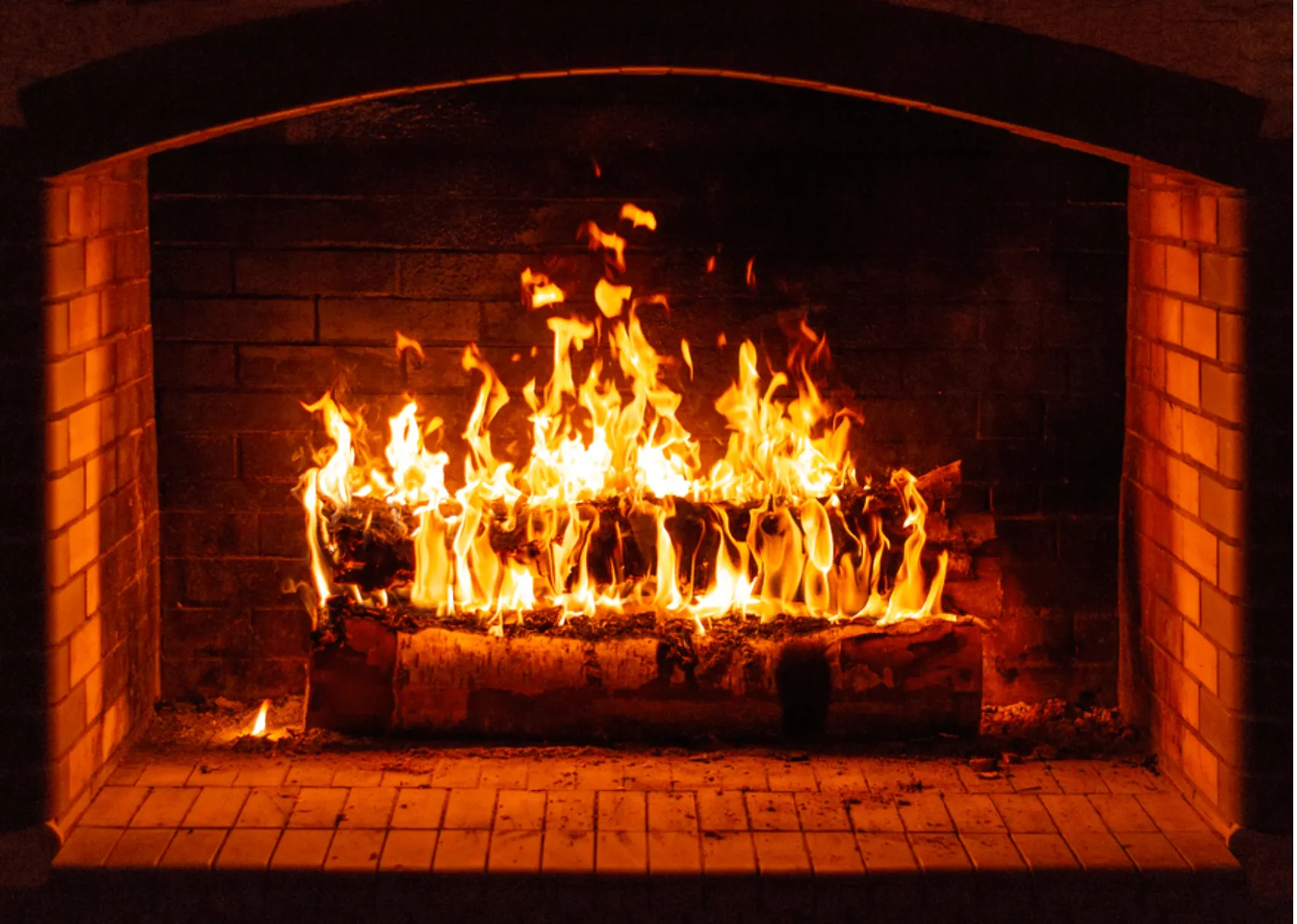
The parts of your fireplace where a fire is formed are most crucially the hearth and the firebox. The firebox is where the fire burns, whereas the hearth is the fireplace’s floor.
Quality Chimney Services Since 2005
Chimney Cleaning & Inspections Since 2005